
Analysis and Handling of Abnormal Noise Faults in Roots Vacuum Pumps
Post time: 2026-05-27 15:40:47
In industrial vacuum systems, the Roots vacuum pump is one of the core pieces of equipment. Abnormal noise generated during operation is often a direct feedback indicating a change in the internal mechanical state. Ignoring these signals can lead to rotor seizure, pump body damage, or production interruption.
This article starts from practical engineering experience, classifies common faults based on noise characteristics, and provides a logical approach to troubleshooting and resolution.
1. Rotor Friction and Collision (Metallic Impact Sound)
This type of noise typically manifests as a regular metallic impact or rubbing sound. It represents a high-risk fault. The pump should be stopped immediately upon discovery to prevent rotor destruction.
Fault Cause Analysis
Bearing failure: Bearing wear increases the clearance, causing the rotor shaft to shift and disrupting the designed clearances between rotor and pump casing, and between rotors.
Timing gear abnormality: Worn gear tooth surfaces, broken teeth, or excessive meshing clearance cause the two rotors to lose synchronization and interfere with each other.
Foreign object ingestion: Ineffective inlet filtration allows foreign objects such as weld slag or metal particles to enter the pump chamber, causing jamming.
Thermal expansion interference: Starting the pump under overpressure conditions or a failed cooling system causes components to overheat, expand, and seize.
Solution
Stop and inspect: Disconnect power and manually turn the rotor. If it cannot turn or resistance is abnormal, do not restart under any circumstances.
Disassemble and repair: Open the pump body, check the condition of the bearings and timing gears, and replace damaged components.
Clean and assess: Remove foreign objects from the pump chamber, and inspect the rotor and inner pump casing wall. Minor scratches can be polished; if deformation or deep grooves are present, the rotor must be replaced.
2. Lubrication System Fault (High-Pitched Squeal)
If the equipment emits a continuous high-pitched squeal or dry friction sound, it usually points to a problem with the lubrication system.
Fault Cause Analysis
Oil problems: Low oil level or emulsified, carbonized, or degraded oil leads to reduced lubrication performance.
Oil passage blockage: The oil line or oil injection orifice is blocked by debris, causing high-speed gears and bearings to operate with insufficient or no oil.
Solution
Oil management: Check the sight glass and add oil to the standard level. If the oil appears black or emulsified, completely replace the lubricating oil and the oil filter.
Clear the oil passage: Disassemble and clean the oil line to ensure smooth oil supply.
3. Assembly and Alignment Issues (Vibration with Noise)
This type of fault often occurs after equipment maintenance or after prolonged operation leading to loosening of fasteners, and is usually accompanied by intense vibration of the entire unit.
Fault Cause Analysis
Coaxiality deviation: The alignment accuracy between the motor shaft and the pump shaft exceeds the allowable tolerance.
Loose fasteners: Insufficient preload on anchor bolts or pump body connection bolts.
Improper clearance adjustment: Failure to strictly adjust the clearances between rotor and pump body, and between rotors, according to standards after maintenance.
Solution
Realign: Use a dial gauge to re-correct the coaxiality of the coupling to meet the requirements of the equipment technical documentation.
Tighten and re-measure: Tighten all bolts according to the specified torque standards. For equipment that has just been maintained, re-check all clearances with gauges.
4. Drive Motor Fault (Electromagnetic Hum)
An isolation test is required to rule out motor faults and avoid misdiagnosis.
Fault Cause Analysis
Motor bearing damage: The motor's own bearings are dry or worn.
Fan fault: The motor cooling fan blades are damaged or rubbing against the fan cover.
Solution
No-load test: Disconnect the coupling and briefly jog the motor alone. If the noise persists, the fault is confirmed to be with the motor, which then requires repair or replacement.
5. Piping and Foundation Resonance (Low-Frequency Boom)
The noise does not originate from the pump body itself, but from physical resonance caused by the installation environment.
Fault Cause Analysis
Insufficient foundation rigidity: The equipment mounting base is not secure, or the vibration damping pads have failed.
Pipeline stress: Rigid connections are used for the inlet and outlet piping, allowing pump vibration to be transmitted and amplified through the pipes.
Solution
Reinforce the foundation: Inspect and reinforce the equipment base, and replace failed vibration damping pads.
Install flexible connections: Add bellows or rubber flexible joints to the pump inlet and outlet piping to interrupt the vibration transmission path.
Maintenance Recommendations
For noise faults in Roots vacuum pumps, prevention is better than repair. The following measures are recommended in daily management:
Regular oil changes: Replace the lubricating oil at regular intervals based on operating hours, and monitor changes in oil quality.
Adequate protection: Ensure a high-precision filter is installed on the inlet to prevent particles from entering the pump chamber.
Standardized maintenance: After equipment maintenance, always use measuring tools to re-check clearances and alignment data. Do not rely solely on experience for assembly.
Summary: Abnormal noise in a Roots vacuum pump is an "alarm" for the internal state of the equipment. Quickly locating the fault type based on noise characteristics – metallic impact sounds indicate rotor friction, high-pitched squeals indicate lubrication issues, vibration with noise indicates assembly/alignment problems, electromagnetic hum indicates motor faults, and low-frequency booming indicates resonance – can effectively reduce troubleshooting time, lower the risk of equipment damage, and ensure stable operation of the vacuum system.
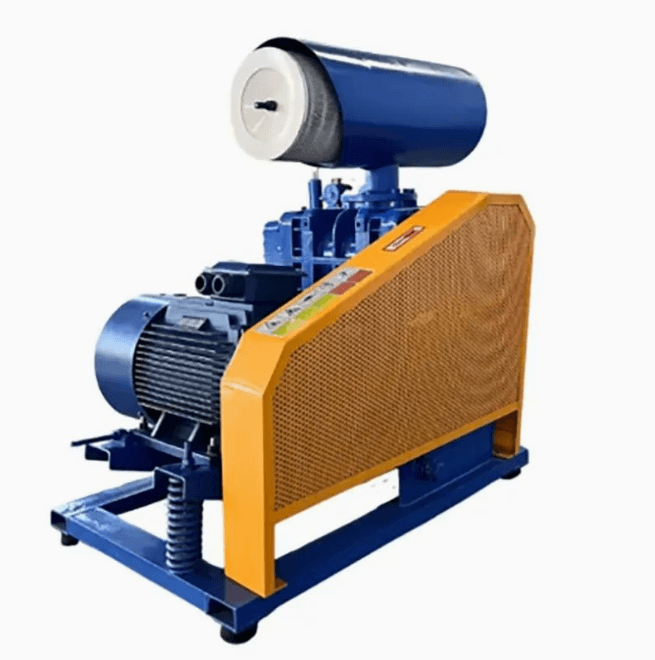
Roots Blower Product Information
Web: http://www.greentechblower.com (Group Web) ‖ http://www.zqblower.cn (Chinese) ‖ http://www.ringblower.cn/ (Ring blower) ‖ http://www.china-blower.com (Roots Blower)