
Acoustic Engineering in Industrial Turbomachinery: Mastering Noise Mitigation and Environmental Comp
Post time: 2026-10-13 14:10:31
In modern wastewater treatment facilities, chemical processing plants, and heavy manufacturing sites, acoustic noise management has evolved from a secondary occupational preference into an active regulatory compliance priority. Traditional aeration rooms equipped with legacy positive displacement Roots blowers or multi-stage centrifugal units are notorious for generating extreme low-frequency pulsation, heavy floor vibrations, and intense acoustic pressure levels that often exceed eighty-five to ninety decibels. Continuous exposure to such environments creates serious workplace safety hazards, forces capital expenditures on external acoustic sound barriers, and triggers frequent noise complaints from neighboring residential communities.
Drawing from decades of frontline field installation and noise abatement engineering experience, our technical specialists have analyzed how transitioning to active magnetic levitation turbomachinery redefines plant ergonomics. Let us examine the acoustic physics and engineering strategies that allow high-efficiency maglev turbo blowers to maintain whisper-quiet continuous operation while meeting strict global environmental noise standards.
Expert Q&A: Understanding Noise Abatement and Structural Dynamics in Maglev Systems
Q1: What makes traditional blowers extremely loud, and how does magnetic levitation eliminate internal mechanical noise?
Answer: Legacy positive displacement blowers generate high acoustic levels primarily through mechanical friction, gear mesh impact, and structural vibrations transmitted through shaft bearings into the outer casing. Additionally, intermeshing lobes or impellers produce severe pressure pulsations within the discharge manifold. Modern maglev turbo blowers eliminate these mechanical noise sources at their origin. By suspending the rotating shaft in mid-air using active magnetic bearings, physical metal-to-metal contact is entirely removed. Furthermore, direct coupling between the high-speed permanent magnet synchronous motor and the precision-machined 3D titanium impeller generates a continuous, ultra-smooth aerodynamic discharge flow, eliminating low-frequency pulsation shocks and reducing baseline operational noise levels to below seventy-five decibels.
Q2: Why is structural vibration decoupling crucial for protecting plant civil infrastructure and pipe headers?
Answer: High-amplitude mechanical vibration does not remain localized inside the blower casing; it travels through concrete equipment pads, steel supports, and connected discharge piping networks. Over years of continuous duty, these persistent mechanical oscillations cause metal fatigue, joint looseness, sensor calibration drift, and structural cracking in civil aeration basins. Because a maglev turbo blower operates on a frictionless electromagnetic cushion, mechanical vibration transmitted to the foundation is virtually zero. This structural stability eliminates the need for massive concrete inertia bases or heavy spring dampers, protecting surrounding piping headers, electrical cabinets, and civil structures from long-term fatigue damage.
Q3: What acoustic enclosure features and air-intake baffling mechanisms ensure total urban boundary compliance?
Answer: Achieving low acoustic emissions requires a comprehensive system-level enclosure design. Modern maglev turbo blowers integrate specialized multi-layered acoustic cabinet structures designed with the following protective engineering elements:
High-Density Internal Sound-Absorbing Lining: Composite acoustic insulation linings line the internal cabinet walls, trapping high-frequency sound waves generated by high-speed air compression.
Labyrinth Intake Silencers and Baffled Ducts: Air enters the enclosure through engineered labyrinth air channels that break up acoustic wave propagation, ensuring high volumetric air flow without allowing suction noise to leak into the external room.
Vibration-Isolated Internal Sub-Frames: Internal power electronics, variable frequency drives, and cooling fans are mounted on isolated sub-chassis, preventing secondary harmonic resonance from transferring to the outer protective shell.
Frequently Asked Questions on Acoustic Management and Workplace Ergonomics
1. Do maglev turbo blowers require secondary external soundproofing walls in residential zones?
In most municipal and urban installations, no. Because a standard cabinet-enclosed maglev turbo blower operates below seventy-five decibels measured at a one-meter distance, the noise level is well within standard residential perimeter guidelines without needing secondary acoustic barriers or specialized soundproofing buildings.
2. How does low operational noise improve overall plant maintenance and operator safety?
Operating in a low-noise environment eliminates acoustic fatigue for plant technicians, allows clear verbal communication during routine inspections, and enables operators to detect subtle mechanical or piping anomalies across adjacent utility equipment easily.
3. Can acoustic performance degrade over time as the blower ages?
No. Unlike traditional gear-driven or belt-driven blowers that become progressively louder due to gear wear, bearing degradation, and belt slipping, a maglev turbo blower maintains its original low acoustic profile throughout its entire service life because its internal rotation remains completely frictionless.
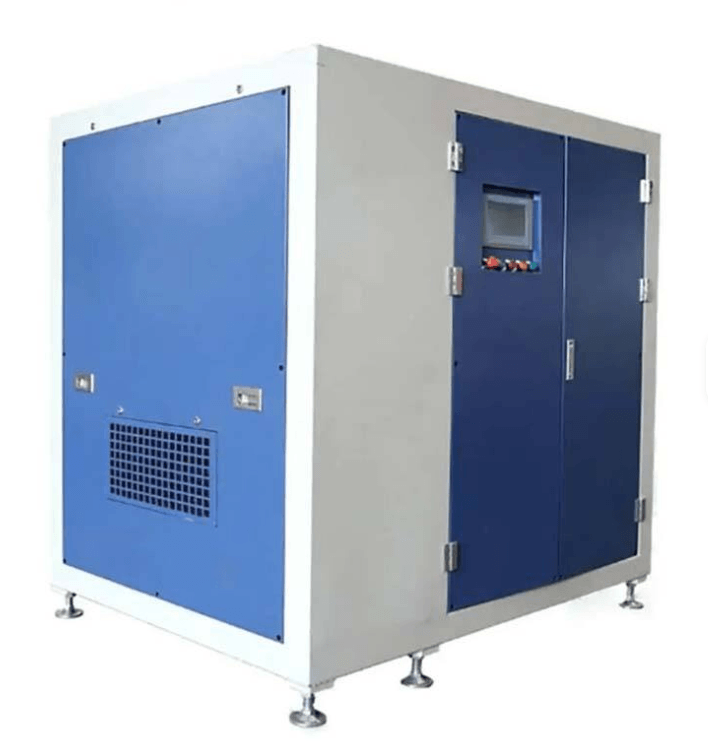
Maglev Turbo Blowers Product Information
Web: http://www.greentechblower.com (Group Web) ‖ http://www.zqblower.cn (Chinese) ‖ http://www.ringblower.cn/ (Ring blower) ‖ http://www.china-blower.com (Roots Blower) ‖ https://www.zibovacuumpump.com (Vacuum Pump)