
Beyond Predictive Maintenance: How Artificial Intelligence Transforms Fault Diagnosis in Maglev Turb
Post time: 2026-08-31 15:11:05
For plant operations managers and industrial reliability engineers, unexpected equipment failure represents the ultimate operational risk. In critical wastewater aeration lines or continuous pneumatic conveying systems, an unannounced shutdown can cascade into regulatory non-compliance, costly emergency repairs, and severe production bottlenecks.
While high-speed active magnetic levitation turbo blowers inherently eliminate mechanical wear by removing physical contact between the rotor and stator, intelligent machine protection requires more than just mechanical separation. Modern reliability engineering has shifted from reactive firefighting and traditional scheduled maintenance to advanced fault pre-diagnosis driven by artificial intelligence and real-time data telemetry. To understand how contemporary tier-one manufacturers safeguard continuous plant uptime, we must examine the intersection of rotor dynamics, machine learning, and proactive fault detection.
Why Do Conventional Vibration Monitoring Systems Fall Short on High-Speed Turbomachinery?
Traditional industrial machinery relies on simple threshold-based vibration sensors. If overall vibration velocity or displacement spikes beyond a preset numerical limit, an alarm trips, or the machine shuts down. However, this legacy methodology presents critical vulnerabilities when applied to ultra-high-speed turbo equipment operating above 20,000 RPM.
Reactive Rather Than Proactive Alerts: Traditional alarms only trigger after physical deterioration or mechanical rubbing has already begun, offering zero warning before a minor anomaly escalates into a catastrophic failure.
Inability to Isolate Root Causes: A broadband vibration spike could stem from multiple sources—ranging from minor electrical unbalance in the motor stator and aerodynamic turbulence in the volute to sensor drift or thermal expansion. Simple threshold sensors cannot distinguish between these distinct failure modes.
False Trips and Operational Disruption: Generic alarm settings frequently generate nuisance trips during normal transient states, such as startup acceleration or sudden load shifts, leading to unnecessary plant shutdowns and operator desensitization.
How Do Edge Computing and Digital Twin Models Predict Anomalies Before They Occur?
Modern maglev turbo blowers integrate high-speed digital signal processors (DSPs) and edge computing modules directly into the control architecture, creating a continuous diagnostic feedback loop.
Real-Time Frequency Spectrum Analysis: Instead of monitoring raw overall vibration, embedded algorithms continuously decompose real-time displacement sensor data into detailed frequency spectra using Fast Fourier Transform (FFT) mathematics. This allows the system to isolate exact harmonic signatures associated with specific component wear.
Dynamic Behavioral Baselines: By establishing a digital twin model of the specific blower operating map, the control system understands what normal harmonic behavior looks like across every combination of ambient temperature, rotational speed, and mass flow demand.
Early-Stage Anomaly Isolation: When minor deviations occur—such as microscopic particulate buildup on an impeller blade altering aerodynamic balance—the algorithm detects the subtle phase and frequency shift long before overall vibration levels breach safety thresholds.
What Role Do Autonomous Self-Correction Routines Play in System Protection?
Detecting an anomaly is only half the battle; advanced machinery must be capable of mitigating risks autonomously to protect plant infrastructure.
Adaptive Levitation Stiffness Adjustment: If the control telemetry detects transient aerodynamic instability or external seismic disturbances, the magnetic bearing digital controller instantly modulates virtual stiffness and damping parameters in milliseconds, stabilizing the shaft position without human intervention.
Automated Thermal and Electrical Compensation: When seasonal ambient temperature swings alter internal clearances, smart diagnostic routines automatically recalibrate eddy-current sensor offset voltages, ensuring absolute positioning precision year-round.
Actionable Maintenance Guidance: Rather than outputting cryptic error codes, intelligent diagnostic platforms provide plant maintenance teams with specific, prioritized recommendations—such as scheduling an inlet filter inspection or verifying VFD grounding integrity—optimizing labor allocation and spare parts inventory.
Frequently Asked Questions on Maglev Blower Fault Diagnostics
1. Can maglev blower diagnostic systems integrate with plant-wide SCADA networks?
Yes. Modern diagnostic architectures support open industrial communication protocols, transmitting detailed health scores, operating logs, and predictive maintenance alerts directly to central supervisory control and data acquisition systems via Modbus or OPC UA.
2. Does predictive maintenance eliminate the need for routine physical inspections?
While predictive software continuously monitors internal electrical, thermal, and dynamic health, routine physical checks—such as inspecting inlet air filters, verifying cabinet cooling fan operation, and checking terminal connections—remain essential components of a comprehensive site maintenance program.
3. How do cloud connectivity features enhance long-term equipment reliability?
Cloud-based telemetry aggregates anonymized operational data across thousands of installed units, allowing manufacturer engineering teams to continuously refine diagnostic algorithms, identify macro-level operational trends, and deploy over-the-air firmware updates that enhance overall machine resilience.
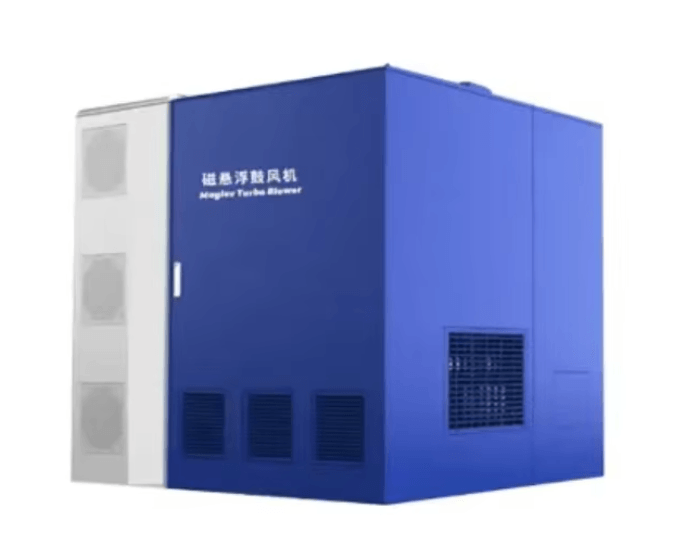
Maglev Turbo Blowers Product Information
Web: http://www.greentechblower.com (Group Web) ‖ http://www.zqblower.cn (Chinese) ‖ http://www.ringblower.cn/ (Ring blower) ‖ http://www.china-blower.com (Roots Blower) ‖ https://www.zibovacuumpump.com (Vacuum Pump)