
Beyond the Spec Sheet: A Comprehensive Architectural Comparison of Industrial Blower Technologies an
Post time: 2026-09-01 15:16:46
When industrial plant owners, municipal engineers, and engineering procurement contractors evaluate air delivery systems for wastewater aeration or pneumatic conveying, they are often overwhelmed by vendor claims. Spec sheets present impressive volumetric flow rates and peak pressures, but they rarely capture how an aeration system performs after five, ten, or fifteen years of continuous, heavy-duty operation.
Selecting the right industrial blower requires moving past basic catalog data to understand the underlying engineering architecture. By examining how different blower classes manage mechanical friction, aerodynamic efficiency, noise suppression, and long-term maintenance, engineering teams can clearly see why modern maglev turbo blowers represent a definitive paradigm shift in fluid machinery.
The Evolutionary Dead-End of Mechanical Contact: Evaluating Roots and Multi-Stage Blowers
To understand the value of advanced magnetic levitation, one must first look at the baseline technologies that dominated industrial plants for decades: positive displacement Roots blowers and multi-stage centrifugal blowers.
The Burden of Mechanical Friction: Traditional blowers rely on oil-lubricated bearings, timing gears, and physical sliding seals. This mechanical contact introduces parasitic drag, consumes measurable input energy just to overcome internal friction, and creates continuous wear.
Efficiency Ceilings and Thermal Drift: Roots blowers operate on volumetric displacement, resulting in high pulsation and severe thermal expansion limits. Multi-stage centrifugal blowers struggle with complex internal leakage paths across numerous internal impellers, capping overall wire-to-water efficiency significantly lower than modern single-stage units.
The Maintenance Cycle Trap: Because mechanical components degrade under continuous stress, traditional systems demand frequent oil changes, belt replacements, and periodic overhauls, driving up long-term operational expenditures (OPEX).
Foil Bearings Versus Active Magnetic Bearings: Unpacking the Dynamics of High-Speed Levitation
As the industry shifted toward high-speed direct-drive turbo machinery to eliminate gearboxes, two primary bearing philosophies emerged: air foil bearings and active magnetic bearings (AMB).
Passive Air Foil Limitations: Foil bearings rely on an aerodynamic wedge of ambient air generated during high-speed rotation to lift the shaft. While effective at high operating speeds, foil bearings experience direct physical contact during startup and shutdown sequences, causing gradual coating wear over thousands of start-stop cycles.
Absolute Non-Contact Precision in Maglev Units: In contrast, active magnetic bearings utilize controlled electromagnetic fields to suspend the rotor completely in free space before rotation even begins. Real-time digital sensors monitor shaft position thousands of times per second, ensuring zero mechanical contact during every phase of operation, including startup and emergency coast-down.
Dynamic Adaptability: Unlike passive foil systems that lack external adjustability, AMB controllers can actively tune stiffness and damping parameters to absorb sudden pressure surges or transient load shifts without compromising shaft stability.
The Lifespan Economics: Quantifying Total Cost of Ownership Across Two Decades
When evaluating capital equipment investments, initial purchase price represents only a fraction of the total cost of ownership. Over a twenty-year operational lifecycle, energy consumption and maintenance dictate true financial viability.
Aerodynamic Efficiency Realized: While legacy blowers often stall out at low overall efficiencies, a well-engineered maglev turbo blower achieves peak wire-to-water efficiencies approaching ninety-six percent by pairing high-speed permanent magnet motors with optimized aerodynamic impellers and variable frequency control.
Acoustic Environment Transformation: Traditional blowers generate abrasive, high-frequency noise that requires massive, space-consuming acoustic enclosures and hearing protection protocols for plant staff. Maglev turbo blowers operate smoothly with noise levels strictly maintained at or below eighty decibels, transforming the working environment of the blower room.
Elimination of Lubricated Maintenance: Because active magnetic levitation requires no lubricating oil, facilities completely eliminate oil disposal costs, filter replacements, and catastrophic bearing seizure risks, ensuring reliable, unattended operation for decades.
Frequently Asked Questions on Blower Technology Selection
1. How does initial capital cost compare between traditional blowers and maglev turbo blowers?
While the initial equipment purchase price for a maglev turbo blower is higher than a conventional Roots blower, the dramatic reduction in electrical power consumption typically recovers the capital price difference within two to three years of continuous operation.
2. Can maglev blowers operate reliably in harsh, dusty industrial environments?
Yes. Modern maglev turbo blowers feature sealed, IP-rated electronic enclosures and utilize high-efficiency inlet air filtration packages to protect internal components, ensuring robust performance even in demanding municipal wastewater and chemical processing facilities.
3. What happens to a maglev blower during an unexpected total power failure?
Advanced maglev systems incorporate built-in uninterruptible power supply (UPS) ride-through capabilities or mechanical auxiliary landing bearings. These safety features ensure the high-speed rotor touches down smoothly and safely without damaging the stator or permanent magnets during an emergency shutdown.
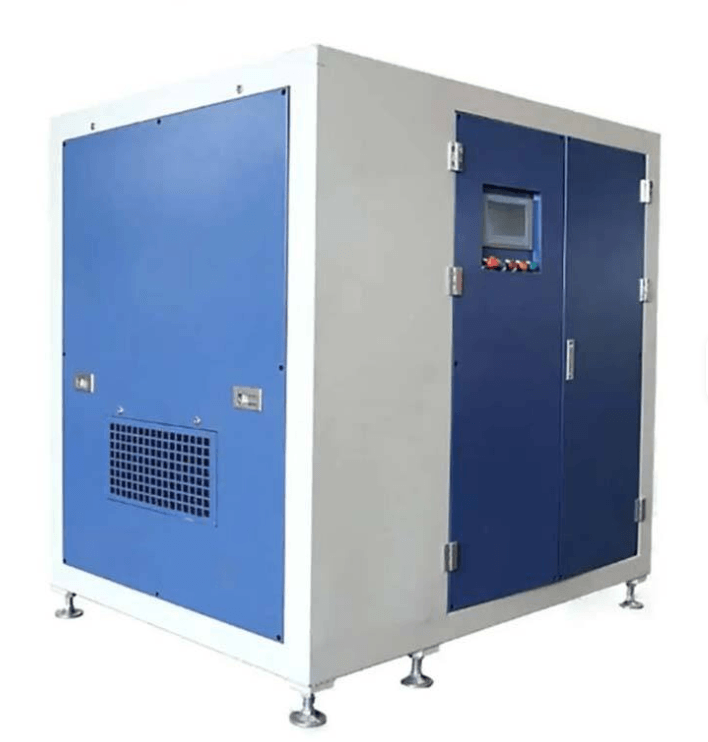
Maglev Turbo Blowers Product Information
Web: http://www.greentechblower.com (Group Web) ‖ http://www.zqblower.cn (Chinese) ‖ http://www.ringblower.cn/ (Ring blower) ‖ http://www.china-blower.com (Roots Blower) ‖ https://www.zibovacuumpump.com (Vacuum Pump)