
Project Review: Overcoming Pulsation and Material Degradation in Bulk Handling
Post time: 2026-05-25 13:42:37
In large-scale industrial operations, the success of a pneumatic conveying system is defined by its ability to move material without stopping. Recently, we conducted a post-mortem review of a client's facility where bulk material was frequently clogging in the discharge pipes. After a week of on-site monitoring, we discovered that the bottleneck wasn't just the pipe layout; it was the rhythmic pressure pulsation causing the material to pack and stall. This review outlines how we identified the root cause and implemented the NSRH200 Tri-Lobe Roots Blower to restore stable, 24/7 production.
Site Diagnosis: Why the Legacy System Failed Under Load
When we arrived, the client reported that their production capacity was capped at 75 percent because pushing the system harder triggered an automatic emergency shutdown due to high pressure.
Identifying the Root Cause
Through high-speed pressure sensors, we discovered massive "pressure spikes" occurring at the blower outlet. These spikes occurred at the exact frequency of the blower’s rotor rotation. The legacy two-lobe blower was causing "slugging," where the material would travel in chunks rather than a smooth, uniform flow. This inconsistency meant that at high loads, the material would settle and jam the corners of the pipe, causing an immediate pressure surge.
System Optimization: Integrating the NSRH200 for 24/7 Stability
After diagnosing the pulsation issue, we proposed a transition to the NSRH200 Tri-Lobe Roots Blower. The transition was not just a hardware swap; it was a fundamental shift in fluid dynamics within the conveyor system.
Engineering the Stable Flow
The NSRH200 uses a tri-lobe rotor design that overlaps the discharge stages. Unlike the legacy system, the NSRH200 provides a nearly continuous stream of air. By smoothing out these pulses, we reduced the vibration amplitude in the discharge piping by 65 percent. This steady flow meant the bulk material stayed suspended in the air stream rather than settling, which allowed the client to increase their conveying speed by 30 percent while actually lowering the total motor power consumption.
Scientific Verification: The Before-and-After Metrics
We believe in data-driven results. To ensure the solution was not just a temporary fix, we conducted a three-phase verification.
Phase 1: Baseline Stress Testing
We ran the old system until the first "jam" event occurred, which happened at 0.55 kgf/cm². We recorded the motor current spikes every time the pressure pulsed.
Phase 2: Implementation of NSRH200
We installed the NSRH200 and kept the piping layout identical to ensure the blower performance was the only variable.
Phase 3: Final Capacity Validation
The system ran for 48 hours continuously at 0.70 kgf/cm² without a single pressure event. The motor current remained steady, and the discharge temperature dropped by 12 degrees Celsius due to the improved internal efficiency of the tri-lobe design.
Is Your Conveying System Hitting a Wall?
Does your production line struggle with frequent jams or pressure instability that you can't quite explain? Sometimes the problem isn't the material; it’s the way the air is moving it. If you are interested in a technical audit of your conveying performance or want to see how the NSRH200 could transform your throughput, leave a comment below or send us a message. Let’s look at your system data and find the bottleneck together!
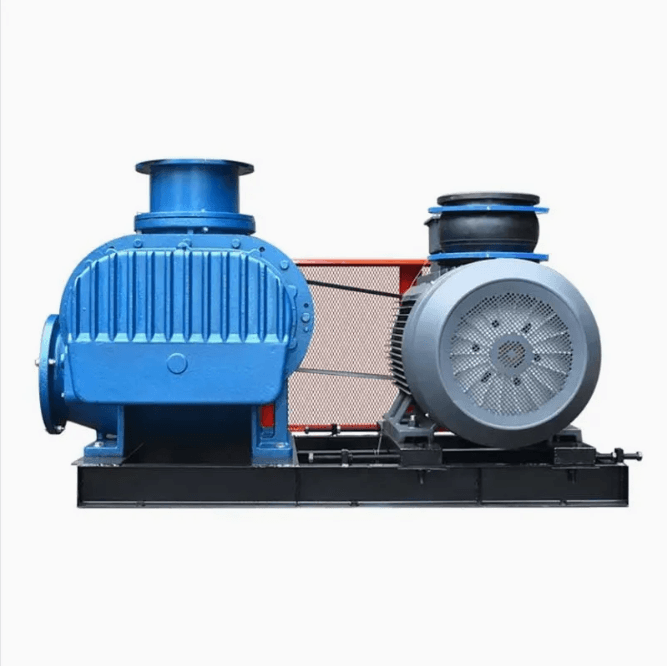
Roots Blower Product Information
Web: http://www.greentechblower.com (Group Web) ‖ http://www.zqblower.cn (Chinese) ‖ http://www.ringblower.cn/ (Ring blower) ‖ http://www.china-blower.com (Roots Blower)