
Tri-Lobe vs. Two-Lobe Roots Blowers: How Optimized Rotor Design Improves Operating Stability
Post time: 2026-08-28 15:22:37
As industrial applications continue to demand greater stability, efficiency, and service life from air-blowing equipment, the rotor design of Roots blowers has also undergone continuous development. As an important advancement over the traditional two-lobe Roots blower, the tri-lobe Roots blower offers advantages in operating stability, vibration and noise control, and component service life through its optimized lobe arrangement and load distribution characteristics.
The primary difference between tri-lobe and two-lobe Roots blowers lies in the number of rotor lobes and their angular arrangement. The lobe tips of a tri-lobe rotor are evenly distributed at 120° intervals, while those of a two-lobe rotor are arranged at 180° intervals. This structural difference affects not only the volumetric displacement process but also the load distribution and stiffness of the rotors during operation.
Higher Rotor Stiffness Reduces the Risk of Contact During Operation
120° Lobe Arrangement Improves Rotor Load Distribution
The lobe tips of a tri-lobe Roots blower are evenly distributed around the rotor at 120° intervals, providing a more balanced load condition along the rotor. Compared with a two-lobe rotor, this configuration offers greater resistance to angular deflection, helping reduce rotor deformation under operating loads.
For Roots blowers, precise clearances must be maintained between the rotors and between the rotors and the cylinder housing. Excessive rotor deflection or angular deformation can increase the risk of abnormal contact. Therefore, higher structural stiffness helps control rotor deformation and contributes to stable long-term operation.
Reduced Rotor Deflection Enhances Operating Reliability
During continuous operation, Roots blowers are subjected to pressure forces, torque, and cyclic loads. If rotor stiffness is insufficient, prolonged operation may cause changes in operating clearances and negatively affect equipment reliability.
The evenly distributed lobes of a tri-lobe rotor provide better resistance to deformation under comparable operating conditions. Reduced rotor deflection can help minimize the possibility of contact between the rotors or between the rotors and the housing, improving the safety and reliability of the blower.
More Even Load Distribution Helps Extend Gear and Bearing Life
More Balanced Loads on the Rotors and Gear Set
In addition to increasing rotor stiffness, the tri-lobe configuration can improve load distribution during operation. Because the three lobes are evenly positioned around the rotor, the loads transmitted through the rotor and timing gear set can be distributed more evenly during normal load cycles.
Gears and bearings are critical components that directly influence the long-term reliability of a Roots blower. Continuous exposure to uneven or highly concentrated cyclic loads may accelerate wear on gear tooth surfaces and bearings.
The tri-lobe design helps reduce localized load concentration and allows gears and bearings to operate under relatively smoother load conditions.
Reduced Component Wear Supports Longer Service Life
For industrial applications requiring continuous operation, the fatigue life of critical components is just as important as initial equipment performance.
By optimizing rotor geometry and load distribution, the tri-lobe Roots blower can help reduce cyclic impact on gears, bearings, and other key components. This can contribute to longer component service life and lower maintenance requirements over extended operating periods.
Six Smaller Chambers Help Reduce Pulsation and Noise
Higher Pulsation Frequency with the Tri-Lobe Design
Another notable characteristic of the tri-lobe Roots blower is that it forms six smaller working chambers per revolution, compared with four larger chambers in a conventional two-lobe Roots blower.
During the discharge process, periodic changes in gas flow create pressure pulsations. With more working chambers per revolution, the tri-lobe design increases the pulsation frequency while reducing the volume change associated with each individual discharge event.
This helps reduce pulsation magnitude and provides a smoother gas flow output.
Lower Gas Pulsation Can Improve Noise Performance
Pressure pulsation affects not only the blower itself but can also transmit vibration and noise through the connected piping system. For industrial applications with strict environmental noise requirements, controlling blower noise has become an increasingly important consideration in equipment selection.
By increasing the number of working chambers per revolution, the tri-lobe design produces more frequent but lower-amplitude flow pulses. This can help improve the blower's overall noise characteristics. Combined with appropriate piping design, silencers, and vibration isolation measures, the entire air-blowing system can achieve improved acoustic performance.
Tri-Lobe Roots Blowers Offer an Important Option for High-Stability Applications
Overall, both two-lobe and tri-lobe Roots blowers have established applications, but the tri-lobe design incorporates several structural improvements that can enhance operating performance. The 120° lobe arrangement increases rotor resistance to deformation and helps reduce the risk of rotor contact. More balanced load distribution can help protect gears and bearings, while six smaller working chambers per revolution can increase pulsation frequency and reduce pulsation magnitude, contributing to smoother airflow and improved noise performance.
As industrial applications place greater emphasis on stable operation, low noise, and long service life, tri-lobe Roots blowers are attracting increasing attention in wastewater treatment, pneumatic conveying, industrial aeration, and various gas-boosting applications.
When selecting a Roots blower, users should consider not only basic parameters such as airflow, pressure, and motor power, but also rotor design, operating stability, noise level, and long-term maintenance requirements. For applications requiring continuous operation and high reliability, the tri-lobe Roots blower provides a technical solution worthy of consideration.
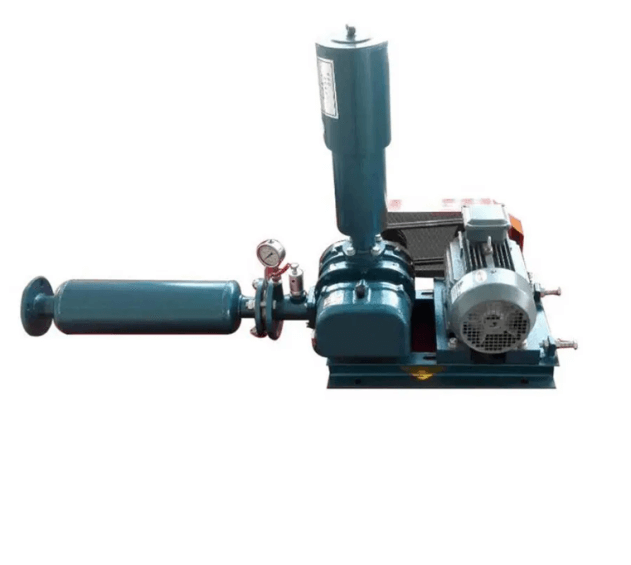
Roots Blower Product Information
Web: http://www.greentechblower.com (Group Web) ‖ http://www.zqblower.cn (Chinese) ‖ http://www.ringblower.cn/ (Ring blower) ‖ http://www.china-blower.com (Roots Blower) ‖ https://www.zibovacuumpump.com (Vacuum Pump)