
Application Advantages of Air Suspension Centrifugal Blowers in Wastewater Treatment
Post time: 2026-10-16 14:17:50
1. Working Principle of Air Suspension Centrifugal Blowers
An air suspension centrifugal blower is an advanced type of blower that integrates air bearing technology, a high-speed permanent magnet motor, and an intelligent control system. Its key feature is the use of an air film to support the rotor, allowing it to operate without direct contact between the rotor and the bearings. This reduces mechanical friction and improves operating efficiency.
In wastewater treatment, these blowers are primarily used for aeration in biological treatment tanks. They supply oxygen to aerobic microorganisms, promoting the decomposition of organic pollutants and the conversion of ammonia nitrogen. Compared with traditional Roots blowers, air suspension centrifugal blowers offer significant advantages in energy consumption, noise reduction, and maintenance.
2. Application Advantages of Air Suspension Centrifugal Blowers in Wastewater Treatment
2.1 High Energy Efficiency and Lower Operating Costs
Aeration systems are typically among the largest energy consumers in wastewater treatment plants. Air suspension centrifugal blowers use high-speed direct-drive technology and efficiently designed impellers to reduce transmission losses and improve energy utilization.
They can also adjust airflow and pressure according to actual demand, avoiding prolonged operation under inefficient conditions. For medium- and large-scale wastewater treatment projects requiring continuous operation, proper equipment selection and optimized control strategies can help reduce electricity consumption and long-term operating costs.
2.2 Contactless Bearing Design and Reduced Maintenance
Traditional blowers may require bearing replacement, lubrication system maintenance, and regular component servicing. Air suspension centrifugal blowers use air bearings to form an air film between the rotor and bearings during normal operation, minimizing mechanical contact and friction.
They generally do not require conventional lubricating oil systems, reducing oil replacement and related maintenance requirements. However, regular inspections of filters, cooling systems, and electrical control components are still necessary to ensure reliable long-term operation.
2.3 Low-Noise Operation and an Improved Working Environment
Blower rooms in wastewater treatment plants can be affected by considerable operating noise. By minimizing mechanical friction and optimizing aerodynamic structures and direct-drive technology, air suspension centrifugal blowers can help reduce noise levels.
With properly designed inlet and outlet piping, silencers, and sound insulation, the operating environment can be further improved, enhancing workplace comfort.
2.4 Intelligent Control and Improved Aeration Management
Modern air suspension centrifugal blowers are generally equipped with variable-frequency control, operating monitoring, and automatic adjustment functions. These features allow operating parameters to be adjusted according to wastewater treatment loads and dissolved oxygen requirements.
When integrated with dissolved oxygen sensors, aeration control systems, and coordinated blower operation, the equipment can distribute airflow more precisely, reducing excessive aeration or insufficient oxygen supply. This helps improve the stability of biological treatment systems.
3. Typical Applications of Air Suspension Centrifugal Blowers
3.1 Municipal Wastewater Treatment
In activated sludge systems and biological treatment tanks at municipal wastewater treatment plants, air suspension centrifugal blowers supply oxygen to microorganisms and meet aeration requirements at different treatment stages.
3.2 Industrial Wastewater Treatment
In wastewater treatment projects involving food processing, pharmaceuticals, chemicals, and other industries, these blowers can provide a stable air supply based on water characteristics, treatment capacity, and process requirements. During application, particular attention should be paid to wastewater loads, required discharge pressure, corrosion resistance, and environmental adaptability.
3.3 Energy-Saving Upgrades at Wastewater Treatment Plants
When upgrading traditional blower systems, the suitability of air suspension centrifugal blowers can be assessed by analyzing existing airflow, pressure, operating hours, and electricity consumption. Combined with pipeline optimization and aeration system improvements, these upgrades can further enhance overall energy efficiency.
4. Equipment Selection and Application Recommendations
Equipment selection should take into account the design airflow, discharge pressure, wastewater treatment process, load variations, and site conditions. Other important considerations include efficiency at partial loads, start-stop frequency, standby equipment configuration, and life-cycle costs.
For large wastewater treatment plants, coordinated operation of multiple blowers should also be considered to distribute loads appropriately. Energy-saving performance should not be evaluated solely on rated operating parameters. Scientific selection, standardized installation, and regular maintenance are essential to achieving the full benefits of the equipment.
5. Conclusion
With advantages including high energy efficiency, low noise, convenient maintenance, and intelligent control, air suspension centrifugal blowers provide an advanced aeration solution for the wastewater treatment industry. As energy-saving upgrades and intelligent wastewater treatment facilities continue to develop, these blowers are expected to play an increasingly important role in reducing operating costs and supporting green, stable, and sustainable development.
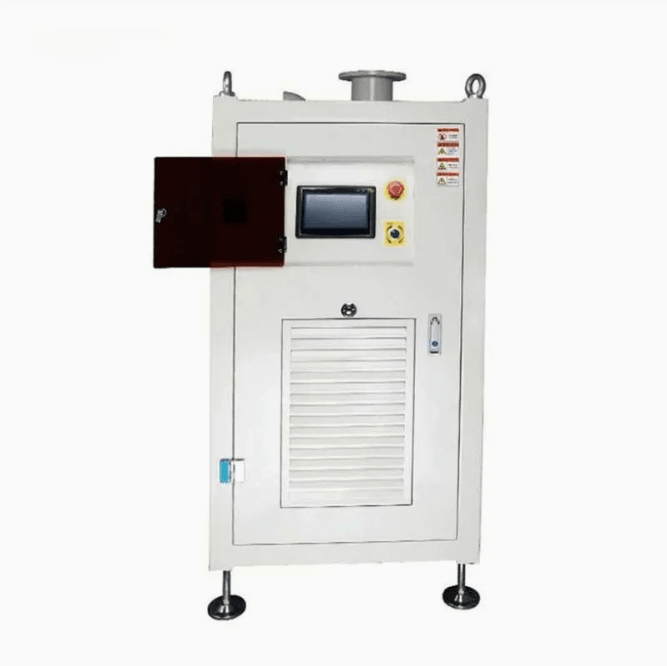
Air Suspension Blowers Product Information
Web: http://www.greentechblower.com (Group Web) ‖ http://www.zqblower.cn (Chinese) ‖ http://www.ringblower.cn/ (Ring blower) ‖ http://www.china-blower.com (Roots Blower) ‖ https://www.zibovacuumpump.com (Vacuum Pump)