
How Can Air Suspension Centrifugal Blowers Improve the Efficiency of Wastewater Aeration Systems?
Post time: 2026-10-20 10:45:49
As the wastewater treatment industry moves toward energy efficiency and intelligent operation, the efficiency of aeration systems is receiving increasing attention. Aeration is a critical process in biological wastewater treatment, supplying dissolved oxygen to microorganisms to promote the decomposition of organic pollutants. Traditional blowers often face challenges such as high energy consumption, frequent maintenance, and limited adjustability. Air suspension centrifugal blowers offer a new solution through efficient aerodynamic design, contact-free bearing technology, and intelligent control systems.
1. Working Principles of Air Suspension Centrifugal Blowers
1.1 Air Suspension Bearing Technology
Air suspension centrifugal blowers use air suspension bearings that generate an air film during high-speed rotation to support the rotor, enabling non-contact operation between the rotor and bearings. Compared with traditional mechanical bearings, this technology reduces friction, minimizes operating losses, and eliminates the need for lubricating oil.
1.2 High-Speed Motors and Centrifugal Impeller Design
Air suspension centrifugal blowers typically use high-speed permanent magnet motors and high-efficiency centrifugal impellers to generate airflow that meets wastewater aeration requirements. Combined with variable-frequency speed control, the blowers can adjust their operating conditions according to system pressure and air demand, improving overall efficiency.
2. How Do Air Suspension Centrifugal Blowers Improve Aeration Efficiency?
2.1 Reducing Operating Energy Consumption
Blowers are among the major energy-consuming devices in wastewater treatment plants. By reducing mechanical friction, optimizing aerodynamic structures, and improving motor efficiency, air suspension centrifugal blowers can lower energy consumption per unit of air delivered. Actual energy savings depend on equipment selection, operating conditions, pipeline resistance, and control strategies, and should be evaluated using on-site data.
2.2 Improving Air Supply Regulation
The oxygen demand of wastewater treatment systems varies with influent quality, flow rate, and treatment stages. If blowers operate at a constant flow rate, excessive or insufficient air supply may occur.
Air suspension centrifugal blowers can work with variable-frequency drives, dissolved oxygen sensors, and automatic control systems to adjust airflow according to actual aeration demand. This helps optimize oxygen supply, reduce unnecessary energy consumption, and maintain a stable biological treatment environment.
2.3 Improving Operational Stability
Stable air pressure and flow help maintain consistent aerator performance and prevent insufficient oxygen supply. Properly matching blower performance with aerator resistance can improve oxygen supply conditions within aeration tanks and enhance system reliability.
However, aeration efficiency is also affected by aerator type, bubble size, water depth, and wastewater characteristics. Therefore, the blower and aeration system should be optimized as a whole rather than focusing solely on high rotational speeds or large airflow volumes.
3. Advantages of Air Suspension Centrifugal Blowers
3.1 Lower Maintenance Costs
Because air suspension bearings do not require conventional mechanical bearing lubrication, these blowers can reduce lubricant replacement and certain mechanical maintenance tasks. Their integrated design can also simplify routine management and reduce maintenance workloads.
Nevertheless, regular air filtration, operating condition monitoring, and scheduled inspections remain necessary to ensure long-term reliability.
3.2 Reduced Operating Noise
Air suspension centrifugal blowers eliminate direct friction associated with traditional mechanical bearings. Combined with appropriate aerodynamic design and sound insulation measures, they can help reduce operating noise and improve the working environment at wastewater treatment plants.
3.3 Support for Intelligent Management
When integrated with a wastewater treatment plant's automation system, these blowers can support operating parameter monitoring, fault alerts, and automatic airflow adjustment. Operators can optimize performance based on dissolved oxygen, airflow, pressure, and energy consumption data.
4. How to Maximize Energy-Saving Benefits
4.1 Select the Right Blower Model
Blower selection should consider treatment capacity, aeration tank depth, required airflow, system pressure, and load variations. This helps prevent prolonged operation outside the blower's high-efficiency range.
4.2 Optimize Aeration and Control Systems
Dissolved oxygen feedback, zoned aeration, and coordinated blower control can help distribute airflow efficiently. Aerators, pipelines, and filters should also be inspected regularly to identify clogging, air leaks, and unnecessary pressure losses.
4.3 Establish an Energy Performance Evaluation System
By recording electricity consumption, airflow, outlet pressure, and dissolved oxygen levels, operators can continuously assess system performance. Using energy consumption per unit of air supplied and wastewater treatment results as evaluation criteria enables more accurate optimization.
5. Conclusion
Air suspension centrifugal blowers provide an effective approach to improving wastewater aeration efficiency by reducing mechanical losses, enhancing airflow regulation, minimizing maintenance requirements, and supporting intelligent control. By integrating proper blower selection, aerator configuration, pipeline design, and automatic control, wastewater treatment plants can achieve more economical, efficient, and stable operations while maintaining treatment performance.
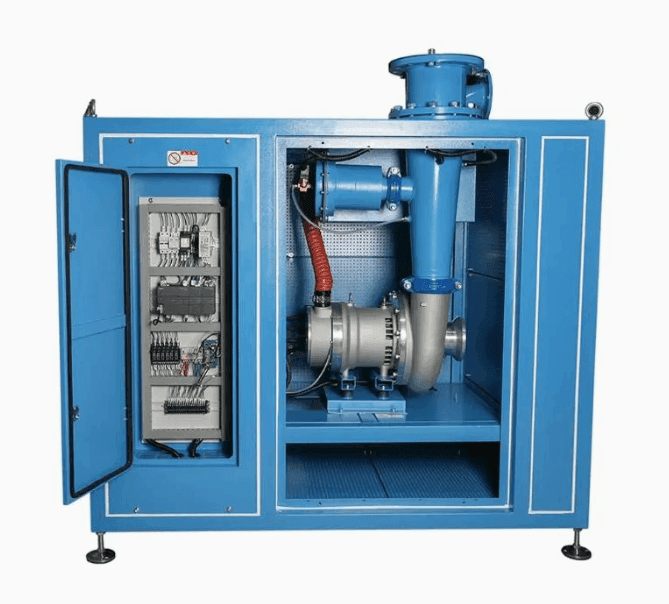
Air Suspension Blowers Product Information
Web: http://www.greentechblower.com (Group Web) ‖ http://www.zqblower.cn (Chinese) ‖ http://www.ringblower.cn/ (Ring blower) ‖ http://www.china-blower.com (Roots Blower) ‖ https://www.zibovacuumpump.com (Vacuum Pump)