
Relationship Between the Casing Structure of M-Series Roots Blowers and Gas Conveying Efficiency
Post time: 2026-10-19 14:12:14
M-series Roots blowers are widely used in wastewater treatment, pneumatic conveying, chemical production, and building materials processing. Their gas conveying efficiency depends not only on rotor design, transmission systems, and operating parameters but also on the casing structure. As one of the core components, the casing supports the rotors, forms the working chamber, maintains internal clearances, and guides gas flow. A well-designed casing can reduce internal leakage and flow losses, improving operating efficiency and stability.
1. Main Structural Features of M-Series Roots Blower Casings
1.1 Casing and Working Chamber Design
M-series Roots blowers typically consist of a casing, rotors, end covers, and related sealing components. The casing forms the working chamber required for gas conveyance, providing space for rotor rotation and the periodic movement of gas.
The dimensions, shape, and machining accuracy of the working chamber affect the clearances between the rotors and the casing. A properly designed chamber maintains suitable internal clearances while allowing the rotors to operate normally, reducing volumetric losses caused by gas backflow.
1.2 Casing Rigidity and Sealing Performance
The casing must have sufficient mechanical rigidity to withstand pressure variations, vibration, and other loads during operation. If the casing lacks rigidity, deformation may occur, affecting rotor clearances and increasing the risk of internal leakage.
The sealing performance of the joints between the casing and end covers, as well as the shaft seal installation areas, also affects overall equipment performance. Appropriate structural design and high manufacturing quality help minimize unnecessary gas leakage and maintain stable conveying capacity.
2. How Casing Structure Affects Gas Conveying Efficiency
2.1 Internal Clearances and Volumetric Efficiency
Roots blowers are positive displacement machines. Their gas conveying capacity is closely related to rotor geometry, rotational speed, and working chamber design. Appropriate clearances must be maintained between the rotors and the casing to prevent mechanical contact during operation.
Excessive clearances allow gas to flow back from the high-pressure side to the low-pressure side, reducing effective airflow. Conversely, insufficient clearances may increase the risk of rotor contact due to thermal expansion, shaft misalignment, or assembly errors. Therefore, casing design must balance sealing performance, operational safety, and manufacturing precision.
2.2 Inlet and Outlet Passages and Flow Losses
The design of the casing's inlet and discharge ports affects how gas enters and exits the working chamber. Appropriate passage dimensions and smooth transitions help reduce local resistance, flow disturbances, and unnecessary pressure losses.
Poorly designed inlet and outlet passages may restrict gas flow, increase pressure fluctuations, or raise noise levels, negatively affecting overall equipment performance. Optimizing airflow passages is therefore an important measure for improving gas conveying efficiency.
2.3 Heat Dissipation and Operational Stability
Roots blowers generate heat during gas compression and conveyance. The casing material, wall thickness, surface structure, and cooling conditions influence the temperature distribution of the equipment.
An effective heat dissipation design helps control temperature increases, reduces the impact of thermal deformation on internal clearances, and lowers the risk of efficiency losses caused by abnormal temperatures. Good thermal stability is particularly important for industrial equipment operating continuously over long periods.
3. Key Measures for Optimizing M-Series Roots Blower Casing Structure
3.1 Improve Manufacturing and Assembly Precision
The dimensions of the casing's internal chamber, the flatness of the end covers, and the accuracy of component mounting positions should be strictly controlled. Rotors, bearings, and sealing components must also be assembled correctly. Standardized manufacturing and assembly procedures help minimize the impact of dimensional deviations on internal clearances and operating conditions.
3.2 Optimize Structural Design According to Operating Conditions
Different applications have different requirements for airflow, pressure, and continuous operation. Structural design should consider gas delivery capacity, operating pressure, medium characteristics, and environmental conditions. Casing geometry and airflow passage dimensions should be selected appropriately, avoiding an excessive focus on high pressure or large airflow at the expense of overall efficiency.
4. Conclusion
The casing structure of M-series Roots blowers is closely related to gas conveying efficiency. Working chamber design, internal clearance control, inlet and outlet passage layout, casing rigidity, and heat dissipation all influence effective airflow, operational stability, and energy consumption.
By optimizing structural design, improving manufacturing precision, and selecting equipment according to actual operating conditions, the overall performance of M-series Roots blowers can be enhanced, providing reliable and efficient gas conveyance for industrial production.
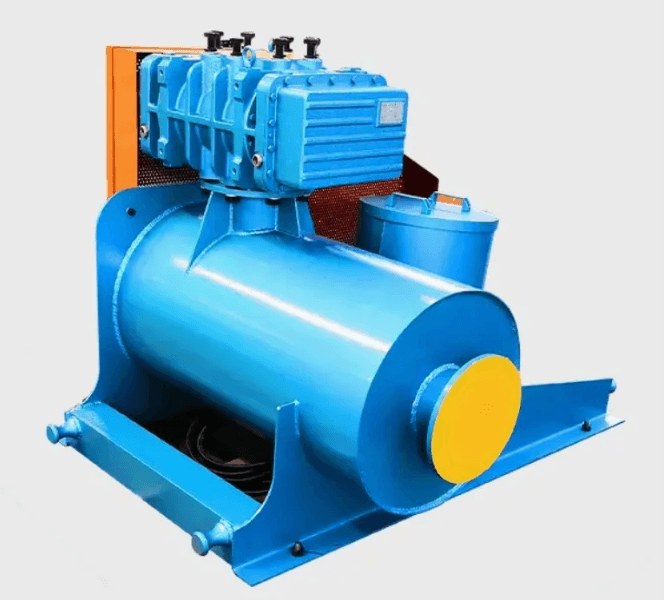
Roots Blower Product Information
Web: http://www.greentechblower.com (Group Web) ‖ http://www.zqblower.cn (Chinese) ‖ http://www.ringblower.cn/ (Ring blower) ‖ http://www.china-blower.com (Roots Blower) ‖ https://www.zibovacuumpump.com (Vacuum Pump)