
How Variable Speed Control Makes Maglev Turbo Blowers More Efficient
Post time: 2026-08-17 14:14:59
Why Blower Speed Matters for Energy Efficiency
When an industrial blower runs for many hours every day, even a small amount of wasted energy can become a big cost. This is especially true in wastewater treatment, pneumatic conveying, food processing, fermentation, and other industries where stable airflow is needed for long periods.
The problem is simple: air demand does not always stay the same. Sometimes a system needs full airflow. At other times, it needs much less. If a blower keeps running at full speed when the process only needs part of its capacity, a lot of electricity can be wasted.
This is where variable speed control makes a real difference. Instead of producing the same airflow all the time, the blower can adjust its speed to match the actual demand.
For industrial users, the idea is straightforward: use only the air you need.
What Is Variable Speed Control?
Variable speed control allows a blower motor to change its operating speed according to the required airflow and pressure. A VFD turbo blower uses a variable frequency drive to control motor speed and adjust blower output.
Traditional systems may use valves or other methods to control airflow. While these methods can reduce the amount of air reaching the process, the blower may still consume considerable power.
With variable speed control, the blower output itself can be adjusted.
For example, imagine a process that needs 100% airflow during peak production but only 60% airflow during normal operation. Instead of forcing the blower to operate at the same speed all day, a variable speed turbo blower can slow down when demand drops.
This simple change can help reduce unnecessary energy consumption.
How a VFD Turbo Blower Saves Energy
Matching Airflow With Real Demand
One of the biggest benefits of a VFD turbo blower is better airflow control. The system can increase or decrease speed based on process requirements.
In wastewater treatment, for example, oxygen demand can change throughout the day. If the aeration system always supplies maximum airflow, part of that air may not be needed. Intelligent airflow control allows the blower to respond to changing conditions.
This means the equipment is not simply working harder. It is working smarter.
Better Performance at Partial Load
Partial load operation is important for industrial energy efficiency. Many blower systems do not operate at full capacity all the time. If equipment is selected only for peak demand, it may spend much of its working life running below that point.
A high-efficiency turbo blower with variable speed control can be better suited to these changing conditions. The motor speed can be adjusted to maintain the required pressure and airflow without continuously running at maximum speed.
This is one reason partial load efficiency has become an important topic when selecting modern industrial blowers.
Reducing Unnecessary Throttling
Airflow can be controlled by changing speed or by restricting the air with valves. These two methods are not the same.
When a valve restricts airflow, the blower can still be using energy to produce air that the process does not actually need. Variable speed control takes a different approach. It reduces blower speed when lower airflow is required.
In simple terms, instead of making too much air and then restricting it, the blower can produce less air from the beginning.
How Maglev Technology Adds More Efficiency
Variable speed control is only one part of the picture. A Maglev Turbo Blower combines speed control with magnetic bearing technology and a high-speed motor.
Because magnetic bearings support the rotating shaft without traditional mechanical contact, the system does not need conventional bearing lubrication. This helps reduce mechanical losses and maintenance requirements.
The direct-drive design also removes the need for traditional transmission components such as belts in many configurations. When combined with a VFD, the blower can respond quickly to changes in airflow demand.
At Greentech, we focus on this combination because energy efficiency is not just about one component. Motor efficiency, impeller design, magnetic bearing technology, airflow control, and system matching all affect the final result.
As a source manufacturer and vacuum pump technology expert, Greentech develops industrial air and vacuum equipment with practical operating conditions in mind, rather than simply focusing on laboratory efficiency numbers.
Intelligent Blower Control for Modern Industry
From Fixed Operation to Smart Operation
Modern industrial systems are becoming more automated. Blowers are no exception.
An intelligent blower control system can monitor factors such as pressure, airflow, motor speed, temperature, and system demand. Based on these signals, the control system can adjust operating conditions.
This can be especially useful when process demand changes frequently.
Instead of asking operators to manually adjust the system, the blower can respond automatically.
Why This Matters for Wastewater Treatment
Wastewater treatment is one of the clearest examples of the value of intelligent airflow control. Aeration systems often account for a large part of a treatment plant's electricity consumption.
Oxygen demand can change because of water flow, organic loading, biological activity, and operating schedules. A blower that can adjust its output according to actual demand has a better chance of avoiding unnecessary aeration.
This makes variable speed control a practical way to support blower energy optimization.
What Should You Consider When Choosing a VFD Turbo Blower?
Choosing an energy-efficient blower is not simply about looking for the highest efficiency number. The blower should match the actual working conditions.
Consider the required airflow, operating pressure, normal load, peak load, working hours, control method, and expected changes in demand.
It is also important to look at the complete system. Poorly designed piping, dirty filters, pressure losses, or incorrect operating settings can reduce the benefits of an efficient blower.
A good blower should work as part of an efficient air system.
The Bottom Line
Variable speed control changes the way industrial blowers operate. Instead of producing a fixed amount of air regardless of demand, a VFD turbo blower can adjust speed and airflow according to actual process needs.
When this technology is combined with magnetic bearings, high-speed motors, direct drive, and intelligent control, a Maglev Turbo Blower can provide an efficient and flexible solution for modern industrial applications.
The key question is not simply, “How powerful is the blower?”
A better question is, “Can the blower provide exactly what my process needs?”
That is where variable speed control becomes valuable. It helps turn a blower from a fixed-speed machine into a smarter part of the entire industrial energy system.
If you are looking to reduce blower energy consumption, improve airflow control, or replace an older fixed-speed system, Greentech can help you evaluate the working conditions and select a suitable solution based on actual airflow and pressure requirements.
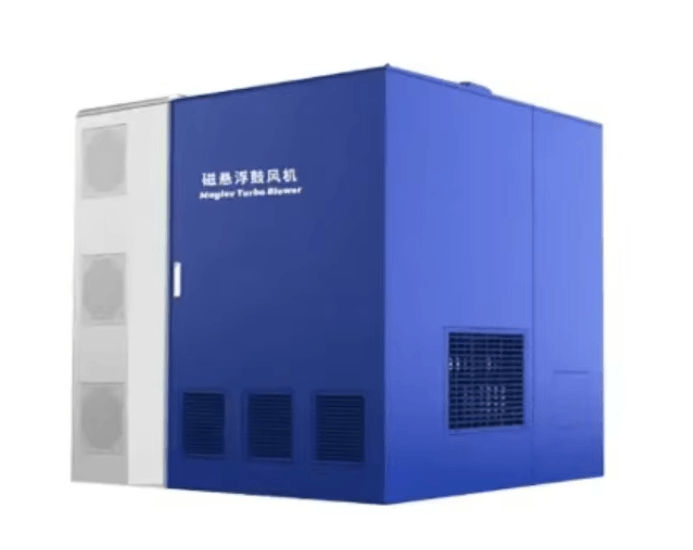
Maglev Turbo Blowers Product Information
Web: http://www.greentechblower.com (Group Web) ‖ http://www.zqblower.cn (Chinese) ‖ http://www.ringblower.cn/ (Ring blower) ‖ http://www.china-blower.com (Roots Blower)