
Beyond the Decibel Meter: How Maglev Engineering Eliminates Noise Pollution in Industrial Blower Roo
Post time: 2026-09-03 13:38:21
When industrial safety officers and plant managers step into traditional blower rooms housing legacy multi-stage centrifugal or Roots positive displacement blowers, hearing protection is non-negotiable. The relentless, high-frequency whining and deep mechanical rumbling generated by conventional gearboxes and sliding bearings create harsh acoustic environments that frequently exceed occupational health and safety noise thresholds.
As modern industrial facilities face tightening workplace regulations and community noise abatement standards, acoustic engineering has transformed from an afterthought into a primary design priority. To understand why modern plant operators are rapidly transitioning to magnetic levitation technology, we must examine the acoustic physics of high-speed fluid machinery and how eliminating mechanical contact fundamentally alters the soundscape of industrial facilities.
Why Do Traditional Industrial Blowers Generate Destructive Noise Frequencies?
The acoustic signature of a conventional blower is a direct byproduct of its mechanical architecture. When physical parts interact under heavy loads at high speeds, mechanical and aerodynamic vibrations propagate freely through the entire machinery framework.
Gearbox Mesh and Bearing Impact Frequencies: Positive displacement blowers rely on synchronized timing gears and steel rolling-element bearings. The continuous metal-on-metal meshing generates intense tonal spikes and high-amplitude mechanical vibration that readily transmit into piping networks and building foundations.
Flow Turbulence and Volute Resonance: Legacy multi-stage impellers operating with restricted throttling valves create severe flow separation and localized turbulence, producing abrasive broadband noise that echoes through ductwork.
The Bulk Enclosure Burden: Because traditional blowers cannot inherently suppress their own mechanical noise, plants are forced to install massive, heavy-gauge steel acoustic enclosures lined with thick sound-absorbing foam. These enclosures complicate routine maintenance, trap heat, and occupy valuable floor space in cramped equipment rooms.
How Does Active Magnetic Levitation Remove the Root Causes of Mechanical Noise?
By redesigning the rotational architecture from the ground up, magnetic levitation technology attacks noise pollution at its absolute source.
Complete Eradication of Metal-on-Metal Contact: Active magnetic bearings suspend the heavy rotor assembly entirely in a controlled electromagnetic field. Because there are no physical balls, rollers, or sliding surfaces touching the shaft during operation, mechanical friction noise is eliminated entirely.
Elimination of Lubrication and Gear Trains: With direct-drive permanent magnet motors replacing external gearboxes, the harsh whining frequencies associated with high-speed gear meshes disappear. The machine runs with a smooth, whisper-quiet hum restricted almost entirely to clean aerodynamic flow.
Inherent Structural Dampening: The real-time digital feedback loops controlling the magnetic bearing cushion micro-vibrations instantaneously, preventing resonance buildup from transferring into the structural casing or mounting skids.
What Are the Long-Term Operational Benefits of a Quiet Blower Room?
The transition to low-noise maglev turbo blowers delivers far-reaching advantages that extend well beyond simple decibel reduction.
Enhanced Workplace Safety and Communication: Lowering continuous ambient noise levels below eighty decibels drastically improves operator comfort, reduces fatigue, and allows plant personnel to communicate clearly without specialized hearing protection during routine walkdowns.
Simplified Facility Layouts: Because maglev turbo blowers operate with minimal vibration and low acoustic output, massive external sound hoods and heavy concrete isolation inertia pads are no longer required, simplifying equipment layout and floor space allocation.
Early Detection of Operational Anomalies: In a quiet equipment room, maintenance engineers can easily hear subtle operational changes, while digital diagnostic touchscreens provide precise telemetry data long before minor anomalies affect performance.
Frequently Asked Questions on Industrial Blower Acoustics
1. Do maglev turbo blowers require any external acoustic enclosures?
In most standard installations, maglev turbo blowers operate quietly enough within their compact, integrated cabinets that massive external walk-in acoustic rooms are completely unnecessary, saving capital expenditure and floor space.
2. How do high rotational speeds affect sound output in maglev units?
While operating at speeds exceeding 20,000 to 100,000 RPM generates high-frequency aerodynamic sound waves, precision 3D-contoured impeller design and balanced magnetic levitation prevent these frequencies from converting into harsh structural vibration or abrasive noise.
3. How do local environmental noise regulations impact blower selection?
Many industrial and municipal facilities face strict nighttime property-line noise limits. Utilizing inherently quiet maglev technology allows plants to comply effortlessly with local environmental codes without investing in expensive secondary silencing infrastructure.
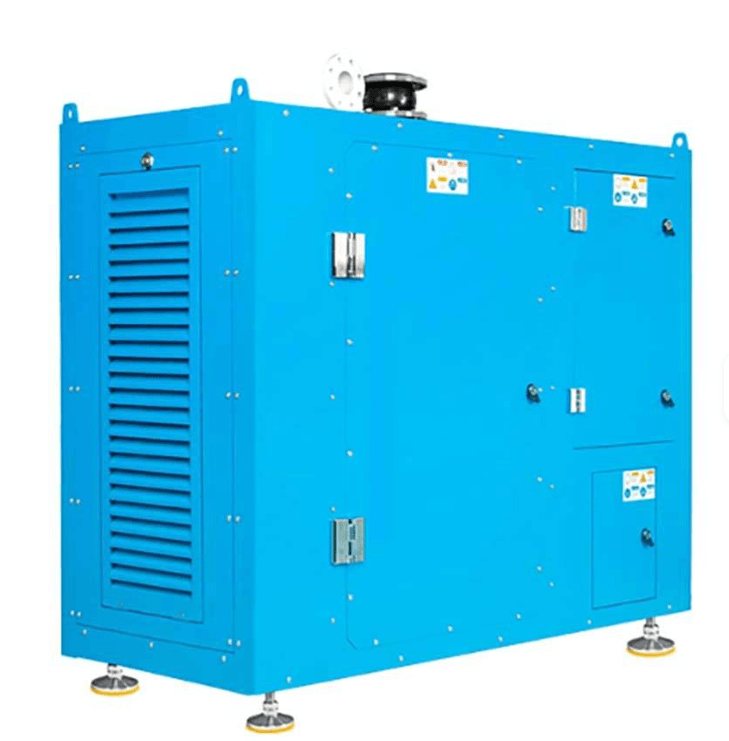
Maglev Turbo Blowers Product Information
Web: http://www.greentechblower.com (Group Web) ‖ http://www.zqblower.cn (Chinese) ‖ http://www.ringblower.cn/ (Ring blower) ‖ http://www.china-blower.com (Roots Blower) ‖ https://www.zibovacuumpump.com (Vacuum Pump)