
Applications of Air Suspension Centrifugal Blowers in Industrial Wastewater Treatment
Post time: 2026-10-19 14:03:42
With the continuous expansion of industrial production, the volume of industrial wastewater continues to increase. Wastewater treatment faces multiple challenges, including treatment efficiency, operating costs, and energy conservation. In biological wastewater treatment, aeration is essential for maintaining microbial activity and improving pollutant removal. Air suspension centrifugal blowers, with their high energy efficiency, stable operation, and convenient maintenance, are increasingly being used in industrial wastewater treatment, providing an effective solution for energy-saving upgrades and stable system operation.
1. Working Principle and Technical Advantages of Air Suspension Centrifugal Blowers
1.1 Working Principle
Air suspension centrifugal blowers use air-bearing technology to support the rotor with an air film generated during high-speed rotation, enabling non-contact operation between the rotor and bearing. The high-speed impeller generates centrifugal force to compress and deliver air to the aeration system, supplying sufficient oxygen for aerobic microorganisms in wastewater.
Compared with traditional Roots blowers, air suspension centrifugal blowers typically use high-speed permanent magnet motors and variable-frequency control technology. Their rotational speed can be adjusted according to actual air demand, improving operating efficiency.
1.2 Key Technical Advantages
Air suspension centrifugal blowers offer high energy efficiency and can reduce electricity consumption during aeration. Their non-contact air bearings eliminate the need for a conventional lubrication oil system, reducing oil replacement and related maintenance. In addition, these blowers generally operate with relatively low noise and require less installation space, making them suitable for industrial wastewater treatment facilities with specific environmental and space requirements.
2. Applications of Air Suspension Centrifugal Blowers in Industrial Wastewater Treatment
2.1 Aeration in Biological Treatment Systems
In wastewater treatment across industries such as food processing, chemicals, pharmaceuticals, and papermaking, biological treatment is an important process for removing organic pollutants. Air suspension centrifugal blowers continuously supply air to activated sludge tanks and biological reactors, meeting the oxygen requirements of aerobic microorganisms and promoting organic matter degradation and ammonia nitrogen conversion.
A stable air supply helps maintain appropriate dissolved oxygen levels and improves the operational stability of biological treatment systems. For industrial wastewater with fluctuating water quality and flow rates, blower configurations and control systems can be optimized to adjust air supply according to changing conditions.
2.2 Energy-Saving Upgrades to Aeration Systems
Some industrial wastewater treatment plants still rely on traditional blowers, resulting in high electricity and maintenance costs during long-term operation. Replacing or upgrading these systems with air suspension centrifugal blowers can reduce unnecessary energy consumption by adjusting airflow to actual treatment demand.
In particular, under low-load conditions or when wastewater flow fluctuates significantly, proper equipment selection and variable-speed control can improve operating economics. However, actual energy savings depend on the efficiency of existing equipment, pipeline resistance, diffuser performance, and operational management.
2.3 Applications in Different Industrial Wastewater Treatment Scenarios
In facilities treating high-concentration organic wastewater, air suspension centrifugal blowers provide the oxygen required for biological reactions. In centralized wastewater treatment plants serving industrial parks, multiple blowers can be configured to improve the flexibility and reliability of the air supply system. For facilities requiring continuous operation, properly configured standby equipment and fault-warning mechanisms can further enhance system reliability.
3. Equipment Selection and Operational Management
3.1 Proper Equipment Selection
Equipment selection should consider wastewater treatment capacity, oxygen demand, design airflow, supply pressure, and aeration system resistance. Performance under varying operating loads should also be evaluated to prevent oversized or undersized equipment from reducing operational efficiency.
3.2 Routine Maintenance
During operation, air filters, cooling systems, electrical control systems, and operating parameters should be inspected regularly. Filters should be cleaned promptly to prevent dust and impurities from affecting equipment performance. In addition, airflow should be adjusted based on dissolved oxygen monitoring to avoid energy waste caused by excessive aeration.
4. Conclusion
The application of air suspension centrifugal blowers in industrial wastewater treatment can improve aeration energy efficiency, reduce maintenance requirements, and increase operational flexibility. As the wastewater treatment industry continues to pursue energy conservation and intelligent upgrades, these blowers are expected to play a greater role in various applications. Through proper equipment selection, effective control, and standardized maintenance, wastewater treatment facilities can further improve operational efficiency and overall economic performance.
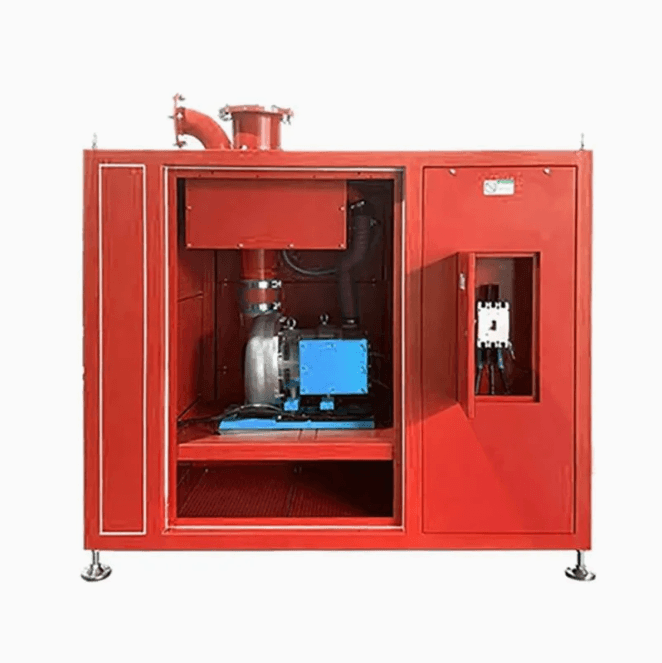
Air Suspension Blowers Product Information
Web: http://www.greentechblower.com (Group Web) ‖ http://www.zqblower.cn (Chinese) ‖ http://www.ringblower.cn/ (Ring blower) ‖ http://www.china-blower.com (Roots Blower) ‖ https://www.zibovacuumpump.com (Vacuum Pump)